
2,400+ researchers supplied
99+ COAs published
6-panel tested every lot
Processing within 1–3 business days
GHRP-2 is a growth hormone–releasing peptide studied for its ability to stimulate endogenous GH and downstream IGF-1 signaling.
By engaging the GHS-R1a receptor and CD36-associated pathways such as PI3K-AKT, it influences tissue protection, inflammatory balance, pain modulation, and body composition through coordinated endocrine and cellular signaling.
Growth Hormone–Releasing Peptide-2 (GHRP-2) is a synthetic hexapeptide designed to stimulate the endogenous release of growth hormone (GH).
GHRP-2 activates GHS-R1a, a receptor expressed in both the pituitary gland and hypothalamus [1]. GHS-R1a increases GH secretion, which then stimulates hepatic and peripheral production of insulin-like growth factor-1 (IGF-1), a key mediator of GH’s effects on tissue growth, tissue repair, and metabolic regulation.
In addition to its role in GH release, GHRP-2 interacts with membrane glycoprotein CD36, which activates downstream pathways such as PI3K-AKT to help with cell survival, nutrient signaling, and anabolic processes [2].
While the functional relevance of these non-GHS-R pathways continues to be explored, they suggest that GHRP-2 may influence cellular metabolism beyond GH secretion alone.
GHRP-2 has been studied for its role in tissue-protective signaling, an effect that appears to arise from activating intracellular survival pathways.
A study investigated whether GHRP-2 could protect against glucocorticoid-induced muscle atrophy both in whole rats and muscle cell models [3].
Researchers found that dexamethasone significantly increased expression of the muscle-specific ubiquitin ligases Atrogin-1 and MuRF1, drivers of muscle protein breakdown.
Treatment with GHRP-2 resulted in:
These results support GHRP-2’s potential role in muscle preservation during catabolic states, such as steroid exposure, chronic illness, or disuse.
GHRP-2 may influence inflammatory signaling and immune modulation through both endocrine and intracellular pathways.
An animal study examined the effects of GHRP-2 on inflammation, metabolic disruption, and cachexia in a rat model of chronic inflammatory arthritis [4].
Arthritis and inflammation was induced in male Wistar rats using Freund’s adjuvant, followed by daily administration of GHRP-2 or saline for eight days.
Arthritis induction was associated with:
Despite not increasing food intake in arthritic animals, GRHP-2 administration resulted in:
These results suggest that GHRP-2’s benefits were not just driven by appetite stimulation.
GHRP-2 can influence pain modulation, an effect thought to arise from its interaction with growth hormone signaling as well as central opioid pathways.
An animal study investigated the role of GHRP-2 in central pain modulation using a mouse model of acute pain [5].
Researchers increased doses of GHRP-2 via intracerebroventricular (i.c.v.) administration (0.1, 0.3, 1, 3, and 10 nmol/L) and measured pain through the tail immersion test. Results showed:
Results indicate GHRP-2 modulates pain perception through central ghrelin receptor activation and opioid receptor crosstalk, supporting its value as a pain regulation adjunct.
GHRP-2 can influence body composition through IGF-1. A case study examined the effects of long-term GHRP-2 administration in a patient with a 20-year history of anorexia nervosa [6].
Although the patient’s fear of eating and desire to be thin had improved, persistent gastrointestinal dysfunction (vomiting, constipation, hypoglycemia, and sub-ileus) prevented meaningful increases in food intake or body weight.
GHRP-2 was administered intranasally before each meal for one year. Following treatment initiation, the patient experienced:
No significant adverse effects were recorded, presenting a new approach to managing treatment-resistant anorexia nervosa through GHRP-2 signaling.
Future studies will need to analyze greater sample sizes for reproducibility.
References
1 Laferrère, B., Abraham, C., Russell, C. D. and Bowers, C. Y. (2005) Growth hormone releasing peptide-2 (GHRP-2), like ghrelin, increases food intake in healthy men. J. Clin. Endocrinol. Metab., The Endocrine Society 90, 611–614
2 Demers, A., McNicoll, N., Febbraio, M., Servant, M., Marleau, S., Silverstein, R., et al. (2004) Identification of the growth hormone-releasing peptide binding site in CD36: a photoaffinity cross-linking study. Biochem. J., Portland Press Ltd. 382, 417–424
3 Yamamoto, D., Ikeshita, N., Matsubara, T., Tasaki, H., Herningtyas, E. H., Toda, K., et al. (2008) GHRP-2, a GHS-R agonist, directly acts on myocytes to attenuate the dexamethasone-induced expressions of muscle-specific ubiquitin ligases, Atrogin-1 and MuRF1. Life Sci., Elsevier BV 82, 460–466
4 Granado, M., Priego, T., Martín, A. I., Villanúa, M. A. and López-Calderón, A. (2005) Anti-inflammatory effect of the ghrelin agonist growth hormone-releasing peptide-2 (GHRP-2) in arthritic rats. Am. J. Physiol. Endocrinol. Metab., American Physiological Society 288, E486–92
5 Zeng, P., Li, S., Zheng, Y.-H., Liu, F.-Y., Wang, J.-L., Zhang, D.-L., et al. (2014) Ghrelin receptor agonist, GHRP-2, produces antinociceptive effects at the supraspinal level via the opioid receptor in mice. Peptides, Elsevier BV 55, 103–109
6 Haruta, I., Fuku, Y., Kinoshita, K., Yoneda, K., Morinaga, A., Amitani, M., et al. (2015) One-year intranasal application of growth hormone releasing peptide-2 improves body weight and hypoglycemia in a severely emaciated anorexia nervosa patient: GHRP-2 treatment for anorexia nervosa. J. Cachexia Sarcopenia Muscle, Wiley 6, 237–241
Research Use Only. All findings described above are derived from preclinical studies (animal models and in vitro experiments). GHRP-2 is not approved by the FDA for any diagnostic or therapeutic use in humans. Genesis Peptides makes no claims regarding human clinical efficacy. This product is sold exclusively for laboratory research.
Every lot undergoes six independent assays before release. Results are published in the lot-specific Certificate of Analysis.
Every lot undergoes our 6-panel testing protocol: identification by ESI-MS, purification by RP-HPLC, conformity, sterility screening, quantification of net peptide content, and LAL endotoxin screening. Full analytical data is published in the Certificate of Analysis for each lot.
Lyophilized peptides should be stored at -20°C or below for long-term stability. Once reconstituted, peptides should be stored at 2–8°C and used within a reasonable timeframe depending on the specific compound. Avoid repeated freeze-thaw cycles. Always store in a dry environment away from direct light.
Orders are processed within 1–3 business days after payment confirmation. Orders placed after 3:00 PM Pacific time or on weekends and holidays will begin processing the next business day. We offer free standard shipping on orders over $150. All orders are shipped in insulated packaging with ice packs when necessary. Standard delivery typically takes 2–4 business days within the continental US.
No. All compounds sold by Genesis Peptides are strictly for in vitro and preclinical laboratory research purposes only. They are not approved for human consumption, therapeutic use, or diagnostic purposes. By purchasing, you confirm the products will be used solely for legitimate research applications.
A Certificate of Analysis (COA) is a document issued by our analytical laboratory that reports the results of all quality control tests performed on a specific lot of product. Each COA includes HPLC chromatograms, mass spectra, endotoxin results, and quantification data where applicable. COAs are available in our COA Library for every lot we have shipped.
Yes. We offer volume pricing for universities, research institutions, and laboratories with recurring needs. Discounts begin at 100+ units and scale with volume. Contact our team for a custom quote tailored to your research requirements.
FOR RESEARCH USE ONLY — Products are sold exclusively for in vitro and preclinical laboratory research. Not for human consumption or administration. Not intended for diagnostic or therapeutic use. These statements have not been evaluated by the FDA.
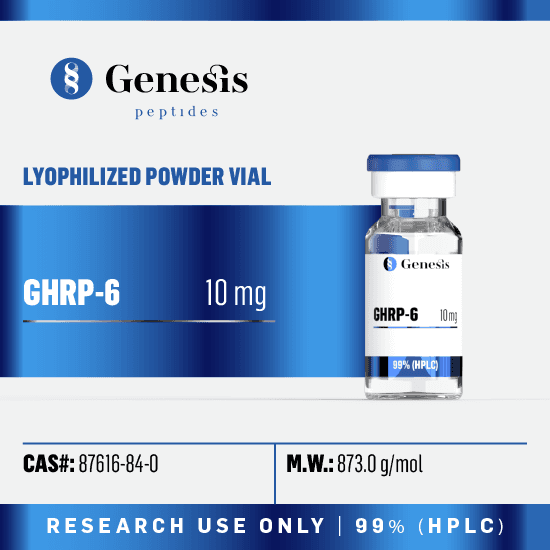
Snapshot GHRP-6 is a ghrelin receptor agonist studied for its ability to stimulate endogenous growth hormone release and modulate appetite, energy balance, and neuroendocrine signaling. Through activation of GHS-R1a and downstream pathways such as GH/IGF-1 and prolactin, GHRP-6 has been explored for effects on body composition, organ protection, immune regulation, and sleep physiology. GHRP-6 uniqueness and mechanisms of action Growth Hormone–Releasing Peptide-6 (GHRP-6) is a synthetic hexapeptide that promotes growth hormone (GH) release by activating hypothalamic and pituitary signaling pathways. What distinguishes GHRP-6 from other GHRPs is its orexigenic and neuroendocrine signaling [1]. GHRP-6 is a potent appetite-stimulating agent, reflecting strong activation of central ghrelin pathways involved in hunger perception and meal initiation. This characteristic has made it a valuable research tool for studying the neural integration of appetite, growth hormone dynamics, and metabolic signaling. At the receptor level, GHRP-6 activates GHS-R1a, triggering downstream GH/IGF-1 axis activity. Through this pathway, GHRP-6 indirectly influences: Anabolic signaling Tissue maintenance Metabolic coordination In experimental settings, GHRP-6 increases secretion of other pituitary hormones, including prolactin and cortisol, highlighting its broader impact on neuroendocrine regulation [2, 3]. GHRP-6 benefits Growth hormone and growth stimulation GHRP-6 can cause release of GH and downstream IGF-1 effects independent of GHRH or somatostatin. This occurs through activation of GHS-R1a [4]. Body composition and appetite GHRP-6 has unique effects on appetite regulation and body composition. An animal study investigated the effects of GHRP-6 on food intake, body weight, and fat accumulation. Researchers compared adrenal-intact with adrenalectomised (ADX) rats (no glucocorticoid secretion) [5]. Rats received twice-daily subcutaneous injections of GHRP-6 (250 μg/kg) for two weeks. Results showed: Significant increases in body weight in both groups, indicating that GHS-induced weight gain occurs independently of glucocorticoids. Increased fat mass (15-20% subcutaneous and visceral) in adrenal-intact rats only (p < 0.05). Weight gain without increases in fat or organ mass in ADX rats. Increased food intake for up to 7 hours in adrenal-intact and ADX rats (p < 0.05). GHRP-6–induced body weight gain is not dependent on glucocorticoids, but activation of the HPA axis contributes to fat mass accumulation. Organ protection and immunomodulation A study evaluated the effects of GHRP-6 on epithelial repair and organ protection in cell models of intestinal injury and rat models of multiple organ failure (MOF) induced by hepatic ischaemia–reperfusion [6]. In cells, GHRP-6 administration tripled cell migration compared with controls (p < 0.01). No increase in cell proliferation measured by [³H]-thymidine incorporation, indicating enhanced cellular motility rather than uncontrolled growth. In the in vivo MOF model, ischaemia–reperfusion caused substantial tissue injury, including: Fivefold increases in neutrophilic infiltration (myeloperoxidase activity) Fourfold increases in lipid peroxidation (malondialdehyde levels) Hepatic and intestinal histological damage In the rat MOF model, results showed that: Pre-treatment with GHRP-6 (120 μg/kg) significantly attenuated injury markers by 50–85% (p < 0.05). When combined with epidermal growth factor (1 mg/kg), additional protective effects were observed. Lung and renal injury markers were also reduced. GHRP-6 directly enhances epithelial repair through increased cell migration and provides broad organ-protective effects, supporting further investigation as a research strategy for mitigating inflammatory and ischemic organ injury. Sleep GHRP-6 has been studied for its influence on sleep architecture. A clinical study investigated how different routes of administration of GHRP-6 influence sleep architecture and endocrine hormone secretion in healthy young men [7]. Participants received either 300 μg/kg orally, 30 μg/kg intranasally, or 30 μg/kg sublingually at night. Results showed that: Oral administration No significant changes in GH, ACTH, or cortisol secretion Reduced stage 2 sleep during the second half of the night Sublingual administration Increased GH secretion during the first half of the night, with no significant effects on ACTH, cortisol, or sleep stages Intranasal administration Significant increase in GH levels across the entire night Increased ACTH secretion in the first half of the night Increased stage 2 sleep during the second half of the night Decreased delta power across the night Results indicate that GHRP-6 can modulate both endocrine secretion and sleep, but that intranasal delivery was the most effective in influencing nocturnal GH secretion and sleep-related parameters. References 1 Yahashi, S., Kang, K. S., Kaiya, H. and Matsuda, K. (2012) GHRP-6 mimics ghrelin-induced stimulation of food intake and suppression of locomotor activity in goldfish. Peptides, Elsevier BV 34, 324–328 2 Carmignac, D. F., Bennett, P. A. and Robinson, I. C. (1998) Effects of growth hormone secretagogues on prolactin release in anesthetized dwarf (dw/dw) rats. Endocrinology, The Endocrine Society 139, 3590–3596 3 Oliveira, J. H. A., Vieira, J. G. H., Abucham, J. and Lengyel, A. M. J. (2003) GHRP-6 is able to stimulate cortisol and ACTH release in patients with Cushing’s disease: comparison with DDAVP. J. Endocrinol. Invest., Springer Science and Business Media LLC 26, 230–235 4 Micic, D., Mallo, F., Peino, R., Cordido, F., Leal-Cerro, A., Garcia-Mayor, R. V., et al. (1993) Regulation of growth hormone secretion by the growth hormone releasing hexapeptide (GHRP-6). The Journal of pediatric endocrinology, J Pediatr Endocrinol 6 https://doi.org/10.1515/JPEM.1993.6.3-4.283 5 Tung, Y. L., Hewson, A. K. and Dickson, S. L. (2004) Glucocorticoid-dependent stimulation of adiposity and appetite by a ghrelin mimetic in the rat. Eur. J. Endocrinol., Oxford University Press (OUP) 150, 905–911 6 Cibrián, D., Ajamieh, H., Berlanga, J., León, O. S., Alba, J. S., Kim, M. J.-T., et al. (2006) Use of growth-hormone-releasing peptide-6 (GHRP-6) for the prevention of multiple organ failure. Clin. Sci. (Lond.), Portland Press Ltd. 110, 563–573 7 Frieboes, R. M., Murck, H., Antonijevic, I. A. and Steiger, A. (1999) Effects of growth hormone-releasing peptide-6 on the nocturnal secretion of GH, ACTH and cortisol and on the sleep EEG in man: role of routes of administration: Sleep endocrinology after GHRP-6. J. Neuroendocrinol., Wiley 11, 473–478
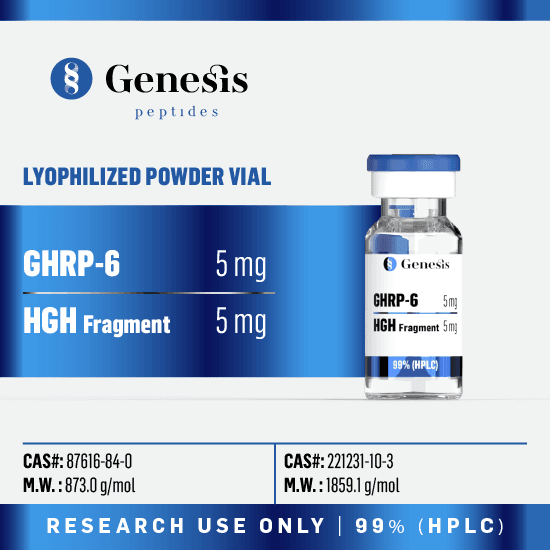
Summary GHRP-6 stimulates growth hormone release, with cardioprotective and myoprotective benefits. Human Growth Hormone (HGH) Frag 176–191 is a synthetic 16-amino acid fragment of GH that isolates and enhances lipolysis without the growth-promoting and effects of full-length hGH. Together, GHRP-6 increases endogenous GH while HGH Frag 176–191 amplifies peripheral lipolysis, creating complementary effects. What Is GHRP-6? GHRP-6 (Growth Hormone–Releasing Peptide-6) is a synthetic hexapeptide and member of the growth hormone secretagogue family [1]. It primarily functions as a ghrelin analog, binding to and activating the ghrelin receptor GHS-R1a and CD36 receptors. GHS-R1a is expressed in the hypothalamus, pituitary, hippocampus, along with the pancreas and liver. The CD36 is expressed in the cardiovascular system and macrophages, which may contribute to GHRP-6’s cardioprotective and anti-fibrotic effects observed in experimental models [1,2]. Originally developed as a growth hormone secretagogue, GHRP-6’s pharmacologic profile has expanded to include anabolic, cytoprotective, and potential cardiometabolic applications in preclinical research. GHRP-6 works by stimulating the growth hormone/IGF-1 axis, increasing pituitary growth hormone release, and promoting downstream IGF-1 production and anabolic effects [1]. Since it’s the only GHRP that increases hunger and appetite, it may be helpful in conditions where increased caloric intake is beneficial [3]. Through interacting with CD36, which plays roles in fatty acid metabolism, inflammation, and tissue damage, GHRP-6 is thought to confer tissue-protective effects [1]. Importantly, GHRP-6 appears to act through mechanisms distinct from those of growth hormone–releasing factors [2]. What Is HGH Frag 176–191? Human Growth Hormone (HGH) Frag 176–191 is a modified peptide fragment derived from the C-terminal region of human growth hormone [4]. This 16-amino acid fragment corresponds to amino acids 176–191 of the full HGH molecule, modified with a tyrosine-to-phenylalanine substitution at position 191 to enhance stability and activity [4]. Unlike full-length growth hormone, HGH frag 176–191 does not replicate the complete growth-promoting effects of hGH [4]. Instead, it appears to isolate and amplify one specific functional region of the hormone, exerting more selective metabolic effects, including enhanced lipolysis, increased lipid utilization, and adipose tissue metabolism without strongly stimulating IGF-1-mediated growth pathways [4]. HGH Frag 176–191 and GHRP-6 Synergy GHRP-6 and HGH frag 176–191 act at distinct points within the growth hormone signaling network. GHRP-6 works upstream through the ghrelin receptor, leading to downstream effects on metabolism, tissue repair, and lipolysis via physiologic GH pulses [5]. In contrast, HGH frag 176–191 exerts downstream effects, representing a small portion of the growth hormone molecule associated with fat metabolism [6]. HGH frag 176–191 appears to act more selectively on adipose tissue, with minimal activation of broader growth or IGF-1 pathways [6]. Mechanistically, this difference suggests the potential for complementary effects. By increasing natural pulsatile growth hormone release, GHRP-6 may enhance the body’s natural growth hormone rhythm, influencing substrate partitioning, promoting lipolysis, and supporting lean tissue maintenance [7]. Endogenous growth hormone’s metabolic actions include stimulating growth hormone–sensitive lipase, increasing fat breakdown, and reducing glucose uptake into adipocytes, shifting the body towards greater fat utilization. However, these effects depend heavily on overall energy balance and insulin status [3]. HGH frag 176–191 has demonstrated increased fat oxidation and reduced adipose accumulation in rodent models, without significantly stimulating IGF-1 or generalized tissue growth [6]. Because the fragment appears to emphasize fat-specific metabolic signaling, while GHRP-6 enhances upstream GH availability, their combined use has been hypothesized to align systemic hormone signaling with more targeted adipose effects. Doses and Ratios The combined effect of GHRP-6 and HGH fragment 176–191 could create a stronger shift towards fat utilization while maintaining, or even concurrently building lean mass. Additionally, they engage different receptor pathways and are unlikely to compete directly, which makes complementary signaling biologically plausible [6, 7]. However, this is largely based on mechanistic reasoning rather than direct clinical studies examining the two together, and conclusions about combined effects are unknown. The 1:1 ratio of 5 mg of HGH frag 176–191 and 5 mg of GHRP-6 aligns with dosages studied in human metabolic trials evaluating fat metabolism. References: 1 Berlanga-Acosta, J., Cibrian, D., Valiente-Mustelier, J., Suárez-Alba, J., García-Ojalvo, A., Falcón-Cama, V., et al. (2024) Growth hormone releasing peptide-6 (GHRP-6) prevents doxorubicin-induced myocardial and extra-myocardial damages by activating prosurvival mechanisms. Front. Pharmacol., Frontiers Media SA 15, 1402138 2 Wu, D., Chen, C., Zhang, J., Bowers, C. Y. and Clarke, I. J. (1996) The effects of GH-releasing peptide-6 (GHRP-6) and GHRP-2 on intracellular adenosine 3’,5'-monophosphate (cAMP) levels and GH secretion in ovine and rat somatotrophs. J. Endocrinol., Bioscientifica 148, 197–205 3 Granado, M., García-Cáceres, C., Frago, L. M., Argente, J. and Chowen, J. A. (2010) The positive effects of growth hormone-releasing peptide-6 on weight gain and fat mass accrual depend on the insulin/glucose status. Endocrinology, The Endocrine Society 151, 2008–2018 4 Habibullah, M. M., Mohan, S., Syed, N. K., Makeen, H. A., Jamal, Q. M. S., Alothaid, H., et al. (2022) Human growth hormone fragment 176-191 peptide enhances the toxicity of doxorubicin-loaded Chitosan nanoparticles against MCF-7 breast cancer cells. Drug Des. Devel. Ther., Informa UK Limited 16, 1963–1974 5 Fairhall, K. M., Mynett, A. and Robinson, I. C. (1995) Central effects of growth hormone-releasing hexapeptide (GHRP-6) on growth hormone release are inhibited by central somatostatin action. J. Endocrinol., Bioscientifica 144, 555–560 6 Heffernan, M. A., Thorburn, A. W., Fam, B., Summers, R., Conway-Campbell, B., Waters, M. J., et al. (2001) Increase of fat oxidation and weight loss in obese mice caused by chronic treatment with human growth hormone or a modified C-terminal fragment. Int. J. Obes. Relat. Metab. Disord., Springer Science and Business Media LLC 25, 1442–1449 7 Lei, T., Buchfelder, M., Fahlbusch, R. and Adams, E. F. (1995) Growth hormone releasing peptide (GHRP-6) stimulates phosphatidylinositol (PI) turnover in human pituitary somatotroph cells. J. Mol. Endocrinol., Bioscientifica 14, 135–138
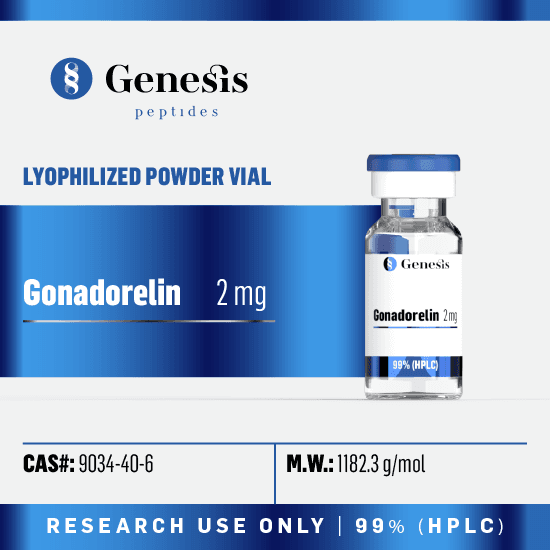
Snapshot: Gonadorelin is a synthetic version of gonadotropin-releasing hormone (GnRH), a key signalling molecule produced in the hypothalamus [1]. It triggers the pituitary to release luteinizing hormone (LH) and follicle-stimulating hormone (FSH) [2]. Clinically, it is used to assess hypothalamic-pituitary function and to induce ovulation in select cases [2]. What Is Gonadorelin Peptide? Gonadorelin peptide is a low-weight, synthetic analogue structurally identical to the body’s endogenous GnRH released by the hypothalamus [1]. It acts as a central regulator of the hypothalamic-pituitary-gonadal axis, stimulating pituitary release of LH and FSH to control reproduction, sex hormone production, and fertility [1]. It binds to LHRH receptors on pituitary gonadotroph cells to stimulate the release of LH and FSH; with continuous exposure, these receptors become desensitized [3]. Clinically, it is used to assess hypothalamic–pituitary function and in select cases of hypothalamic amenorrhea [3]. It is listed as a prohibited substance by the World Anti-Doping Agency (WADA) and can be detected in urine [4]. Gonadorelin peptide effects and uses Gonadorelin has broad clinical applications across reproductive medicine, endocrinology, and gynecology [5]. By providing direct stimulation to the hypothalamic-pituitary-gonadal axis, it has shown benefits for restoring physiological hormone signalling and modulating it for diagnostic or therapeutic purposes [5]. Gonadorelin has been clinically explored to induce ovulation and support fertility interventions, assess endocrine function, manage hormone-sensitive conditions, and treat gynecologic disorders, including endometriosis and uterine fibroids [5]. It has also been studied for contraceptive use and for protecting ovarian function during chemotherapy [6]. Ovulation induction Evidence suggests gonadorelin can support ovulation through restoration or modulation of the normal hypothalamic-pituitary axis signalling [7]. By mimicking endogenous GnRH, gonadorelin can normalize LH and FSH release, re-establish physiologic GnRH pulsatility, and promote ovulatory function in hyperandrogenic disorders and gonadotropin imbalance [1]. Experimental models demonstrate meaningful ovulation rates with gonadorelin compared to controls, supporting its role as an effective ovulation-induction agent [8]. It works via triggering a pituitary LH surge that promotes dominant follicle ovulation and corpus luteum formation [8]. In one animal model, gonadorelin increased sex steroid levels and induced ovulation in 67% of treated females, while no control subjects ovulated [9]. Hormonal Disorder Treatments Gonadorelin modulates the hypothalamic-pituitary-gonadal axis to regulate sex hormone signalling across a range of conditions [10]. When administered repeatedly, it can induce a reversible pituitary desensitization, causing temporary suppression of gonadotropin signalling to sex organs [10]. Clinically, gonadorelin has shown benefits in: Hormone-sensitive prostate cancer [11]. Premenopausal hormone-sensitive breast cancer, where suppression of ovarian steroid production is therapeutically beneficial [12]. Hormonal dysregulation where an induced controlled, reversible hypogonadotropism in conditions of hormone dysregulation can allow endocrine signalling to stabilize [13]. For example, it can help manage precocious puberty to suppress premature activation of the reproductive axis [14]. Managing endometriosis and uterine fibroid size, where the peptide can produce temporary remission of the diseases [14]. Severe, recurrent acute porphyria where prophylactic use of gonadorelin analogues reduced attack frequency in approximately half of treatment courses [15]. Animal studies also show benefits. A large field trial involving dairy cows with cystic ovarian disease reported resolution rates exceeding 90% after a single treatment, regardless of timing postpartum, highlighting the reliability of its hormonal action [16]. Boosting Success Rates of Fertility Treatments Gonadorelin is thought to improve fertility treatment outcomes by stabilizing pituitary signalling during controlled ovarian stimulation [17]. By suppressing erratic or premature LH release, gonadorelin helps to prevent premature ovulation and hormone fluctuations that can disrupt cycle timing [17]. This control can increase the proportion of adequate stimulation cycles, reduce cycle cancellation, and may allow greater flexibility in scheduling stimulation and optimizing IVF protocols. Animal models have found that adding gonadorelin can support pregnancy outcomes. A large cattle study in Brazil found that administering gonadorelin at the time of fixed-time embryo transfer significantly improved conception rates at both 30 and 60 days of gestation compared with untreated controls [17]. Treated animals also showed reduced pregnancy loss, indicating that GnRH analogue use can enhance embryo transfer success, even under less favorable conditions [17]. Gonadorelin side effects There are several known side effects of gonadorelin peptide, with many largely related to predictable, reversible hypoestrogenic states. The most common are mild, including abdominal discomfort, short-lasting flushing, headaches, light-headedness, and nausea [18]. Following repeated doses, there have been reports in the literature of difficulty breathing, continuous flushing, and rapid heart rate, although they are rare [18]. Injection site reactions can occur, as well as hormonal side effects from estrogen depletion, including hot flashes, vaginal dryness, and reversible trabecular bone resorption [18, 2]. References 1 Torrini, F., Scarano, S., Palladino, P. and Minunni, M. (2023) Advances and perspectives in the analytical technology for small peptide hormones analysis: A glimpse to gonadorelin. J. Pharm. Biomed. Anal., Elsevier BV 228, 115312 2 Chrisp, P. and Goa, K. L. (1990) Nafarelin: A review of its pharmacodynamic and pharmacokinetic properties, and clinical potential in sex hormone-related conditions. Drugs, Springer Nature 39, 523–551 3 National Cancer Institute. (2020, February 7) Recombinant Gonadorelin. Definitions, Qeios https://doi.org/10.32388/9g8tac 4 The Prohibited List. World Anti Doping Agency https://www.wada-ama.org/en/prohibited-list 5 Conn, P. M. and Crowley, W. F., Jr. (1994) Gonadotropin-releasing hormone and its analogs. Annu. Rev. Med., Annual Reviews 45, 391–405 6 Lambertini, M., Moore, H. C. F., Leonard, R. C. F., Loibl, S., Munster, P., Bruzzone, M., et al. (2018) Gonadotropin-releasing hormone agonists during chemotherapy for preservation of ovarian function and fertility in premenopausal patients with early breast cancer: A systematic review and meta-analysis of individual patient-level data. J. Clin. Oncol., J Clin Oncol 36, 1981–1990 7 Picard-Hagen, N., Lhermie, G., Florentin, S., Merle, D., Frein, P. and Gayrard, V. (2015) Effect of gonadorelin, lecirelin, and buserelin on LH surge, ovulation, and progesterone in cattle. Theriogenology, Elsevier BV 84, 177–183 8 Lima, F. S., Ayres, H., Favoreto, M. G., Bisinotto, R. S., Greco, L. F., Ribeiro, E. S., et al. (2011) Effects of gonadotropin-releasing hormone at initiation of the 5-d timed artificial insemination (AI) program and timing of induction of ovulation relative to AI on ovarian dynamics and fertility of dairy heifers. J. Dairy Sci., American Dairy Science Association 94, 4997–5004 9 Oliveira, R. G. de S., de Morais, I. S., Paixão, R. V., Bandeira, I. C., Duncan, W. L. P. and O’Sullivan, F. L. de A. (2025) Effects of gonadorelin on gonadotropin expression, plasma sex steroid concentrations and ovarian follicle dynamics in mature tambaqui (Colossoma macropomum). Comp. Biochem. Physiol. B Biochem. Mol. Biol., Elsevier BV 279, 111126 10 Wang, X., Zhang, Z. X., Chen, J., Fu, D., Du, M., Chen, Y., et al. (2025) Efficacy and safety of pulsatile GnRH pump therapy in male infants with congenital hypogonadotropic hypogonadism. Endocr. Connect., Bioscientifica Ltd 14 https://doi.org/10.1530/EC-24-0655 11 Barrett, R., Barrett, R., Dhar, K. and Birch, B. (2021) Gonadorelins adherence in prostate cancer: A time-series analysis of England’s national prescriptions during the COVID-19 pandemic (from Jan 2019 to Oct 2020). BJUI Compass, Wiley 2, 419–427 12 Huerta-Reyes, M., Maya-Núñez, G., Pérez-Solis, M. A., López-Muñoz, E., Guillén, N., Olivo-Marin, J.-C., et al. (2019) Treatment of breast cancer with gonadotropin-releasing hormone analogs. Front. Oncol., Frontiers Media SA 9, 943 13 Shao W.-M., Bai W.-J., Chen Y.-M., Liu L. and Wang Y.-J. (2014) Micropump infusion of gonadorelin in the treatment of hypogonadotropic hypogonadism in patients with pituitary stalk interruption syndrome: cases analysis and literature review. Beijing Da Xue Xue Bao, Beijing Da Xue Xue Bao Yi Xue Ban 46, 642–645 14 Foye, W. O. (2008) Foye’s principles of medicinal chemistry, Lippincott williams & wilkins 15 Schulenburg-Brand, D., Gardiner, T., Guppy, S., Rees, D. C., Stein, P., Barth, J., et al. (2017) An audit of the use of gonadorelin analogues to prevent recurrent acute symptoms in patients with acute porphyria in the United Kingdom. JIMD Rep., Springer Berlin Heidelberg 36, 99–107 16 Hooijer, G. A., Frankena, K., Valks, M. M. and Schuring, M. (1999) Treatment of cystic ovarian disease in dairy cows with gonadotrophin-releasing hormone: a field study. Vet. Q., Informa UK Limited 21, 33–37 17 Defensor, M. L., Faria, A. C. F., Marques, F. L. A., Cadima, G. P., Mafra, M. O. and Santos, R. M. dos. (2021, September 13) Effect of treatment with gonadoreline at the embryo transfer on pregnancy outcomes in bovine. Research Square https://doi.org/10.21203/rs.3.rs-765941/v1 18 (2024, February 15) Gonadorelin: Indications, Side Effects, Warnings. Drugs.com https://www.drugs.com/cdi/gonadorelin.html